Home › Parking Lot Repair & Replacement
Do not let potholes and cracks drive customers away. Our parking lot repair in Atlanta, GA fixes damaged asphalt quickly and safely. Precision Asphalt Atlanta offers patching, milling, and full replacement for commercial lots with alligator cracking, ponding water, or structural failure so your property stays safe, compliant, and attractive.
Precision Asphalt Atlanta provides professional parking lot repair throughout Atlanta, GA, Georgia and the surrounding area. Our licensed, insured crew delivers safe, clean, on-time work with a free estimate before anything begins. Call (470) 683-6069 or request your free quote.
Parking Lot Repair & Replacement in Atlanta, GA
A worn or failing parking lot is more than an eyesore. In Metro Atlanta it can create liability issues, drainage problems, and turn customers away. Precision Asphalt Atlanta specializes in targeted parking lot repair and full parking lot replacement tailored to local traffic loads, Georgia red clay soils, and our hot, humid climate.
Whether your lot serves a small office building in Decatur or a busy retail center near Perimeter, we evaluate the actual causes of distress before suggesting repairs. We look at base strength, drainage patterns, age of the asphalt, type of traffic (cars, delivery trucks, garbage trucks), and how UV and heat have affected the surface. Then we recommend either strategic repairs, resurfacing, or full reconstruction, so you do not overpay for work you do not need.
Our crews work around operating hours to reduce disruption. For many Atlanta businesses we phase work by sections, keeping key parking and drive aisles open. From HOA communities to medical offices and churches, Precision Asphalt Atlanta builds repair and replacement plans that fit real site conditions and business schedules, not a one-size template.
How We Diagnose Parking Lot Problems Before We Repair
Effective parking lot repair starts with finding out why the pavement is failing. In Atlanta we see common patterns: cracking from heavy truck traffic at dumpster pads, rutted drive lanes where water sits after storms, and oxidation from intense summer sun.
Precision Asphalt Atlanta performs a walk-through of your lot, documents issues with photos, and checks several details that most property owners never see. We probe soft spots to identify base failures, look for pumping (water and fines coming up through cracks under load), check slope to see if water is draining to inlets or ponding, and note surface oxidation that signals brittle pavement.
We separate surface-only problems (like raveling or minor block cracking) from structural problems (like alligator cracking, deep rutting, and edge failures). This distinction determines whether a simple mill and overlay will work or if we need to remove and rebuild the base in certain areas. On older Atlanta properties, we often find legacy construction over insufficient stone base or directly on compacted Georgia clay. In those cases, we design repairs that strengthen the base instead of just adding more blacktop on top.
You receive a clear explanation of what is happening under your tires and a written plan that shows which repairs are urgent, which can wait, and which areas are candidates for eventual full replacement.
Targeted Parking Lot Repairs: Patching, Crack Filling, and Surface Fixes
For many Atlanta parking lots, full replacement is not required. Targeted repairs can safely extend pavement life for several years if they are done correctly and at the right time.
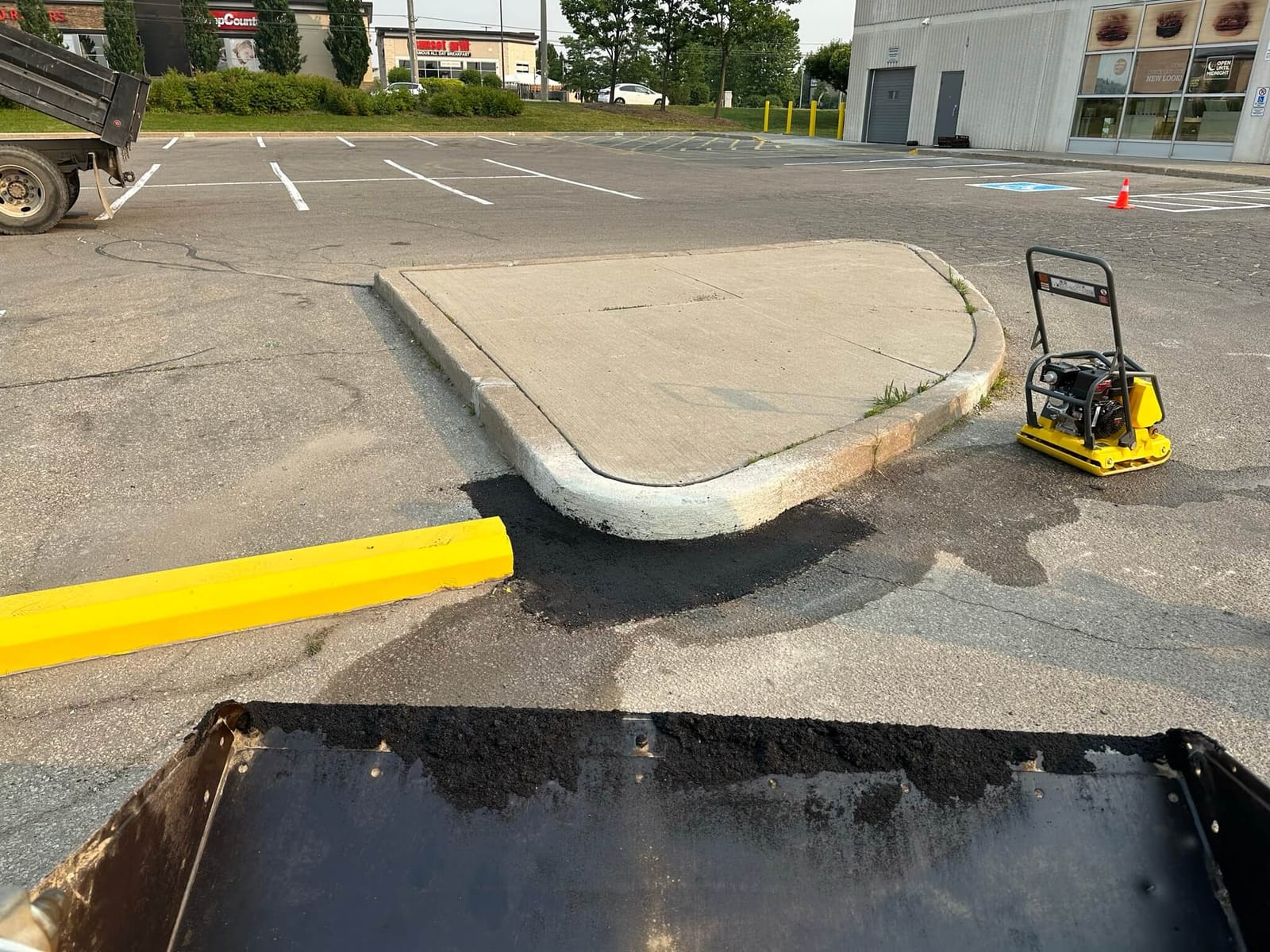
Pothole and full-depth patching: We saw cut the damaged area into a clean rectangle or square, remove the failed asphalt and any soft base material, then rebuild the base with compacted stone. After proof rolling to confirm firmness, we install new hot-mix asphalt in lifts, compact it with a roller and plate tamper, and seal the joints. This method prevents the patch from settling or breaking away at the edges.
Crack routing and sealing: Atlanta’s heat and occasional winter freezes open up cracks that let water into the base. We mechanically route significant cracks to create a uniform reservoir, clean them with compressed air, and fill them with a rubberized crack sealant designed for our temperature range. Proper crack sealing prevents water infiltration, slows oxidation along crack edges, and prepares the lot for future sealcoating or overlay.
Localized skin patching and surface leveling: In rutted drive lanes or low areas that pond water, we clean and tack coat the surface, then place a leveling course of hot-mix asphalt. This improves ride quality and reduces standing water that accelerates pavement damage and can freeze on rare cold mornings.
These focused repair methods are often best for small office complexes, churches, and HOAs that need to control near-term spending while planning for a long-term resurfacing or replacement program.
When Resurfacing or Full Parking Lot Replacement Makes Sense
There is a point where continuing to patch an old parking lot costs more in the long run than a planned resurfacing or complete reconstruction. Precision Asphalt Atlanta helps property managers and owners identify that tipping point based on condition, usage, and risk.
Resurfacing (mill and overlay): If the pavement has widespread surface cracking, minor rutting, or old patches but the underlying base is still structurally sound, we often recommend milling off 1 to 2 inches of the asphalt, repairing isolated failures, then installing a new surface course. Milling preserves established elevations, curb reveals, and ADA slopes while giving you a fresh, smooth surface. This is common for retail centers, schools, and business parks where shutting down entirely for a full rebuild is difficult.
Full-depth reclamation or reconstruction: If we see extensive alligator cracking, pumping, and large areas of settled pavement, the base has usually failed. In these cases we remove the asphalt entirely and rebuild the base with properly graded and compacted stone, sometimes stabilizing with cement or lime where Georgia clay is particularly weak. We then install multiple lifts of asphalt, with thickness chosen for your traffic, from standard cars to regular semi trailer deliveries.
Phased replacement: For high-traffic sites in Atlanta, such as multi building office campuses or busy medical facilities, we can create a multi year phased plan. We rebuild the worst sections first and schedule remaining phases around your financial and operational planning. This approach turns a major capital project into a predictable, manageable program.
Materials, Design Options, and Local Considerations in Atlanta
Parking lot design for Atlanta requires attention to heat, rainfall, and heavy storm events. Precision Asphalt Atlanta selects asphalt mixes and section designs that handle UV exposure and typical Metro Atlanta traffic patterns.
Mix selection: For most lots we use a dense graded surface mix suitable for commercial parking, with aggregate blends that resist rutting in summer heat. In dumpster and loading dock areas, or for frequent truck traffic near industrial corridors, we may specify a heavier duty binder course under the surface to increase structural strength.
Thickness and base: Typical commercial parking areas for passenger vehicles may use 2 to 3 inches of asphalt over 4 to 6 inches of compacted stone. Drive lanes, entrances from busy roads, and truck paths often require thicker sections. Existing poor quality base or saturated clay subgrade might require undercutting and replacement or stabilization to prevent future settlement.
Drainage and grades: Because hard summer storms are common, we pay close attention to slope and inlet locations. We adjust grades where possible during resurfacing to eliminate long term ponding that leads to accelerated cracking and algae growth. Around storm drains and manholes we take time to set structures to finished grade and reinforce around them to minimize future cracking.
Timing: In Georgia, the most reliable seasons for large parking lot repair and replacement projects are spring and fall. These provide moderate temperatures for compaction and curing and fewer afternoon thunderstorms than peak summer. Smaller repairs can be done year round, but planning major work in these windows usually leads to better quality and fewer weather delays.
Cost Factors and How We Control Your Budget
Parking lot repair and replacement costs in Atlanta vary based on more than just square footage. Precision Asphalt Atlanta focuses on transparency so you know what drives the numbers before you approve a proposal.
Key cost drivers include: total area, asphalt thickness, stone base requirements, degree of base failure, number of isolated patch locations, and site access for trucks and equipment. Complex layouts with islands and tight turns may take longer to pave, which can affect labor costs. Adjusting drainage, rebuilding curbs, or correcting years of neglected maintenance can add to the scope.
We help control costs with detailed upfront evaluation. By separating structural repairs from cosmetic ones, we avoid overselling full depth work where a mill and overlay is enough, and we avoid wasting money on cosmetic fixes where structural failure is already advanced. For many Atlanta clients we provide tiered options: a bare minimum safety and liability package, a mid level life extension plan, and a comprehensive rebuild and beautification package.
Our estimates clearly itemize line items for patching, milling, base repair, asphalt tonnage, striping, and any concrete or drainage work. This lets property managers compare options fairly and justify budgets to ownership groups or boards. We are also available to walk your board or regional manager through the proposal so everyone understands what is included and what can be deferred.
What to Expect During Your Parking Lot Project
Precision Asphalt Atlanta aims to make parking lot repair and replacement as predictable as possible for businesses, HOAs, and institutions in and around Atlanta.
Pre-construction planning: We meet with your property manager or facility team to map traffic flows, access requirements, delivery schedules, and any special needs such as ambulance or fire access for medical facilities. We create a phasing and parking plan, then provide notices and site maps you can share with tenants or customers.
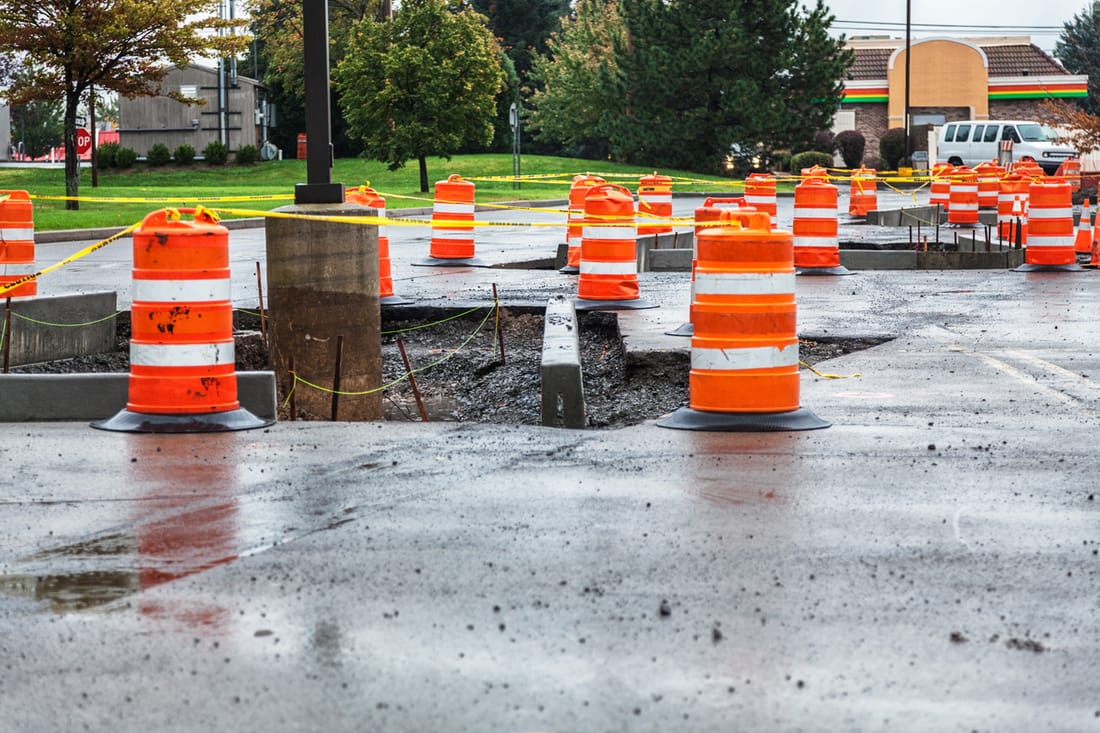
On-site work: Crews typically begin by setting up barricades and signage, then performing saw cutting, milling, or removals. We handle base repairs first, then paving, then striping. For full replacement, you can expect temporary gravel or partial closures while base work is completed. We coordinate with any additional trades such as electricians or landscapers if light poles or islands are being modified.
Safety and communication: We keep walkways and open parking areas clearly marked and maintain access for emergency vehicles. A site supervisor is available throughout the project to answer questions and coordinate adjustments. Daily updates let you know what areas will reopen and when, so you can keep tenants and customers informed.
Closeout: After paving and striping, we perform a walkthrough with you, address any punch list items, and review recommended maintenance, including when to consider sealcoating, crack sealing, or future overlays. Our goal is not only to deliver a new or restored parking lot, but to give you a realistic plan for protecting that investment over the long term.