Home › Walkway and Pathway Paving
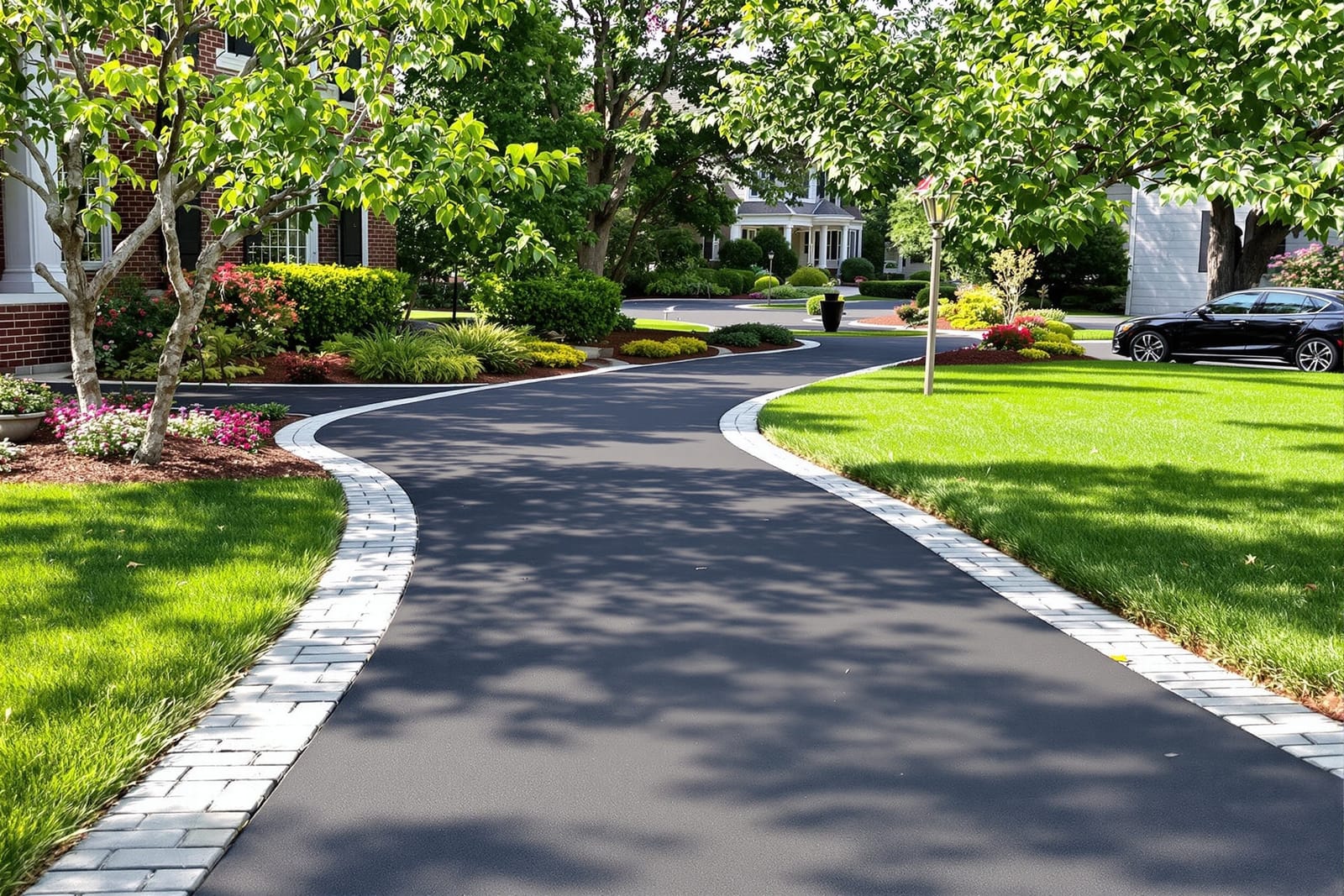
Create smooth, safe access around your property with asphalt walkway paving in Atlanta, GA. Precision Asphalt Atlanta installs neat, well drained paths that connect driveways, entrances, and outdoor spaces. Our team designs asphalt walkways that are comfortable to walk on, easy to maintain, and blend cleanly with your existing landscaping and pavement.
Precision Asphalt Atlanta provides professional asphalt walkway paving throughout Atlanta, GA, Georgia and the surrounding area. Our licensed, insured crew delivers safe, clean, on-time work with a free estimate before anything begins. Call (470) 683-6069 or request your free quote.
Asphalt Walkways Built for Atlanta Homes and Properties
Asphalt walkway paving is one of the simplest ways to clean up how your property looks and functions, especially around older Atlanta homes with uneven or cracked paths. Precision Asphalt Atlanta focuses on walkways and pathways that match how people actually use a property, not just what looks good on a drawing.
Around Atlanta, we work on everything from narrow side-yard walkways in 1940s bungalows in East Atlanta and Kirkwood to wider community paths in newer subdivisions in Gwinnett and South Fulton. Before we talk about price, we look at how the walkway will be used. A primary front walk that guests use in dress shoes needs a smoother, more finished surface than a side path that mainly sees lawn equipment. We also look at slopes, shade, and drainage patterns, because Atlanta’s heavy storms and clay soil are hard on poorly planned paths.
We usually recommend asphalt for walkways when a customer wants a solid, low-maintenance surface that will not shift like pavers or crack in sections like cheaper concrete jobs often do. Asphalt is flexible, which helps when the soil moves or tree roots grow, which is common in older Atlanta neighborhoods with big oaks and pines. For customers worried about looks, we can tighten the surface with a finer mix and add edging so the walkway reads more “finished” than a basic blacktop strip.
How We Plan and Design Your Walkway or Path
Good walkway paving starts with a site visit. A Precision Asphalt Atlanta estimator walks the property with you, looks at where people actually walk today, and checks grades with a level. In Atlanta, we pay close attention to low spots and downspout locations, since standing water after a summer storm is one of the biggest walkway problems we see.
We mark the proposed path with paint or flags so you can see the exact alignment and width. For homes, a typical single-file walkway is 3 feet wide, while a comfortable two-person walk is 4 to 5 feet. Around apartment buildings or community spaces, we may go 6 feet or more if people will be passing each other or using strollers and carts. We also talk about how sharp the curves should be, since tight curves cost a little more in labor and require more careful compaction.
Material choices for asphalt walkway paving mainly involve mix type and surface finish. For residential and light commercial walkways, we usually use a fine or medium aggregate surface mix so the finish is smoother underfoot and more comfortable for kids or older folks. In shaded Atlanta yards where algae can be an issue, we sometimes recommend a slightly more textured surface that keeps some grip when wet. You can also choose simple extras like concrete or brick edging to keep mulch, gravel, and grass from spilling onto the path and to define the edge visually.
Step-by-Step: How Asphalt Walkway Paving Is Done
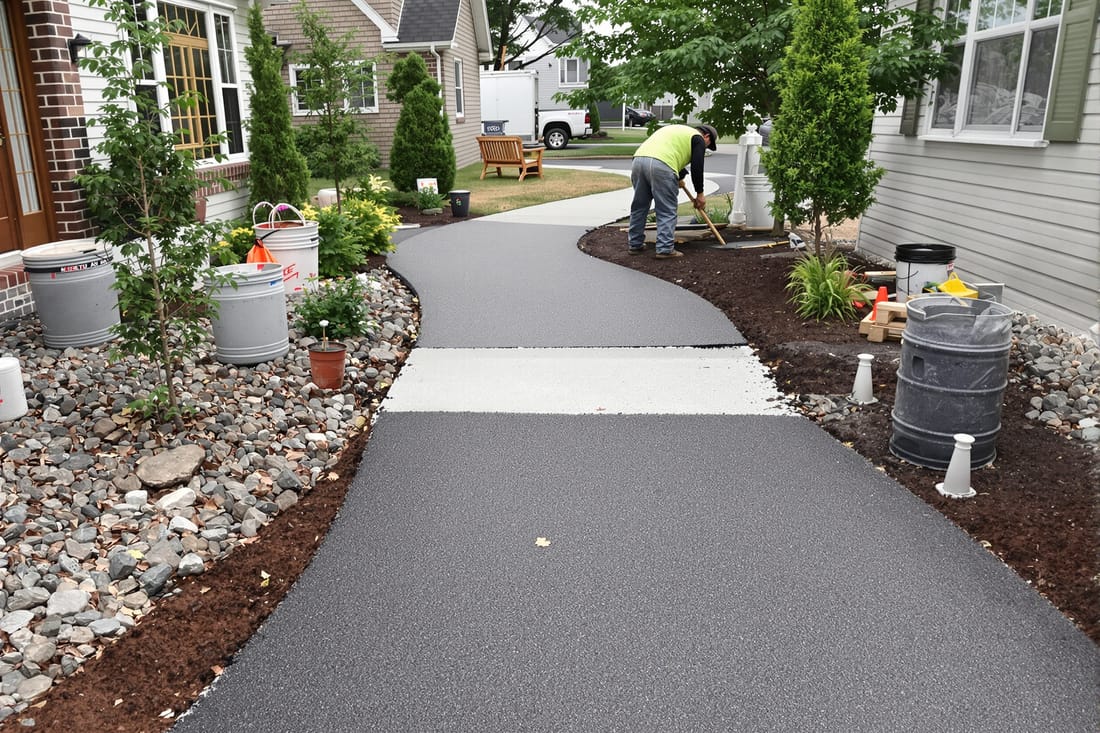
Once the layout is set, Precision Asphalt Atlanta starts with excavation. We strip sod and organic material down to firm subgrade, usually 4 to 6 inches below the finished walkway surface. In many Atlanta yards, especially in Decatur, Smyrna, and older parts of the city, we run into pockets of soft fill dirt near old tree stumps or past landscaping beds. Those weak spots are dug out deeper and replaced with compacted stone so the walkway does not settle in sections.
Next comes the base. For most walkways we install 3 to 4 inches of compacted crushed stone or granite, depending on what is easier to get to your location and what drains better on that site. In flat, poorly draining clay we often use a slightly more open-graded stone to help move water away from the pavement. Every lift of base is compacted with a plate compactor or roller until it is tight and stable. This base work is what keeps the walkway from heaving, cracking, or feeling spongy underfoot a year later.
We then set forms or temporary edge restraints to hold the shape where needed and place the hot asphalt. Typical walkway thickness is 2 to 3 inches after compaction for residential use, and a bit thicker for golf cart paths or heavily used community paths. The asphalt is spread, raked to the correct pitch so water runs off, then compacted with a roller and hand tampers around edges and tight spots. We pay special attention to transitions at driveways, steps, and porches so there is no trip lip.
The final step is cleanup and edge detailing. We cut neat edges, remove excess material, and, if chosen, install topsoil, sod, or rock against the edges. In sloped or erosion-prone areas that are common in parts of North Atlanta and Sandy Springs, we may recommend simple drainage improvements like a French drain beside the path or small swales to keep water from washing across the new pavement.
Costs, Common Problems, and How We Handle Them
Walkway paving cost in Atlanta is driven more by layout and access than by the asphalt itself. Straight, easily reached paths in an open front yard cost less per foot than winding paths behind a house where we have to bring material in with smaller equipment or wheelbarrows. Total square footage, thickness, and how much base work is needed all affect the final price.
On older Atlanta properties, one of the biggest variables is what we find underground. Old brick walkways, buried concrete, or remnants of garden borders can slow excavation and require disposal. We point these out when we uncover them and let you know if they will change the price before we proceed. Tree roots are another common issue. Where roots are shallow and large, we discuss options with you, such as gently bridging over smaller root areas with extra base, slightly shifting the path, or, if necessary, having an arborist evaluate root cutting near significant trees.
Drainage is a frequent problem with existing walkways. Many we tear out were poured flat or pitched toward the house, which leads to slippery algae growth or water against the foundation. When we design a new asphalt walkway, we set a consistent cross slope, usually around 2 percent, so water runs to one side. In problem areas, like at the bottom of a driveway or near downspouts, we may suggest adding shallow drains or rerouting water so it does not sit on or under your new path.
Cracking and raveling are the issues people worry about with asphalt. For walkways, if the base is solid and the mix is properly compacted, cracking is usually minimal and hairline, not structural. Fine aggregate mixes resist surface raveling better than coarse mixes, which is why we use them for walkways instead of the rougher stone you sometimes see on parking lots. If you want extra protection and a uniform color, we can apply a sealcoat after the asphalt has cured, typically after the first Atlanta summer heat cycle.
What Atlanta Property Owners Should Know Before Hiring
Before you hire anyone for asphalt walkway paving, make sure they describe how they will handle base prep, water, and edges. If a contractor is vague about how deep they will dig, what base material they will use, or how they will manage runoff from our heavy Georgia storms, that is a red flag. Precision Asphalt Atlanta puts those details in writing, including approximate thicknesses and any drainage work.
Check that the proposal matches how you and your guests actually move through your property. If you know people always cut across a corner of the yard in Midtown or Virginia Highland, it is usually cheaper in the long run to build the walkway where people naturally walk instead of trying to force them into a sharp-angled path. We welcome customers to walk the marked layout with us and adjust it before any soil is disturbed.
Ask about timelines and curing. For most residential walkways, work is completed within a day or two, depending on length and access. In typical Atlanta weather, you can usually walk on new asphalt within 24 hours, but we may advise waiting longer for heavy items like dumpsters, landscape deliveries, or golf carts. We will give you site-specific guidance, including how to protect the path while the edges are still settling.
Finally, look at similar jobs your contractor has done in the Atlanta area. Precision Asphalt Atlanta can point you to walkway projects in neighborhoods similar to yours, whether it is a narrow in-town lot or a larger suburban property. This helps you see real-world widths, surface textures, and layouts before you commit, and ensures the finished walkway feels like it belongs with your home or building instead of looking like a parking lot strip dropped in the yard.