Home › Road, Street, and Municipal Paving
Keep traffic moving smoothly with professional road paving in Atlanta, GA. Precision Asphalt Atlanta paves subdivision streets, municipal roads, and access routes with durable asphalt built for heavy use. Our crews handle grading, base work, paving, and striping so your roadway meets specifications and serves the community for years.
Precision Asphalt Atlanta provides professional road paving throughout Atlanta, GA, Georgia and the surrounding area. Our licensed, insured crew delivers safe, clean, on-time work with a free estimate before anything begins. Call (470) 683-6069 or request your free quote.
Road Paving for Atlanta Streets That Actually Hold Up
Road paving in Atlanta is not just dropping hot mix and rolling it smooth. Between Georgia clay, heavy MARTA bus routes, delivery trucks, and constant utility work, your pavement has to be built for abuse. Precision Asphalt Atlanta focuses on making roads, streets, and municipal lanes that survive real Atlanta traffic and weather, not just look good for a ribbon cutting.
Most of the public and private roads we pave around Atlanta carry a mix of passenger cars, delivery vans, school buses, and trash trucks. That means we design every section of pavement around real axle loads and turning patterns, especially at intersections, cul-de-sacs, and bus stops where rutting usually starts first. We also pay close attention to drainage. In our climate, one heavy summer storm can find every low spot and weak edge in a poorly designed road.
Whether you manage a small city street, a subdivision network, an industrial park loop, or a private access road, we treat it as a system. The asphalt surface, base stone, subgrade, storm structures, and tie-ins to existing streets all have to work together. Precision Asphalt Atlanta handles new construction, full-depth reconstruction, and mill-and-overlay projects, tailored to the way your road is actually used.
Our road paving work is common in older intown neighborhoods where streets need structural help after decades of patching, in newly annexed areas that require upgrades to city standards, and in growing suburbs where residential streets are getting much more traffic than they were originally built for.
How Road, Street, and Municipal Paving Actually Gets Done
A solid road project in Atlanta starts below the surface. We begin with core samples and test pits whenever possible so we know what is under the existing pavement: old stone base, soil cement, or straight Georgia red clay. This tells us if the road can be milled and resurfaced or if it needs full-depth reclamation or reconstruction.
For new or rebuilt sections, we strip unsuitable material, then proof-roll the subgrade with a loaded truck or roller. Any pumping or deflection shows us soft spots that must be undercut and replaced with suitable fill, typically graded aggregate base (GAB) compacted in lifts. Sometimes we stabilize poor subgrade with lime or cement when it makes more sense than deep excavation, which is common in low spots and creek-adjacent roads around Atlanta.
Once the base is right, we usually install a 2 to 4 inch asphalt binder course followed by a 1.5 to 2 inch surface course. Local road categories and expected traffic control the thickness. Residential streets in a subdivision off Cascade or Briarcliff do not need the same structure as a trucking route serving Fulton Industrial, and we do not design them the same way. For heavier routes, we may use multiple binder lifts and a modified asphalt mix that resists rutting.
If we are rehabilitating an existing street, milling is often the best option. We run a milling machine to remove 1 to 3 inches of old asphalt, correct cross slope for drainage, and give the new surface course a solid bond. Around manholes, valves, and in front of driveway tie-ins, our crew makes fine adjustments so finished grades match and you do not end up with trip lips or ponding at the gutter line.
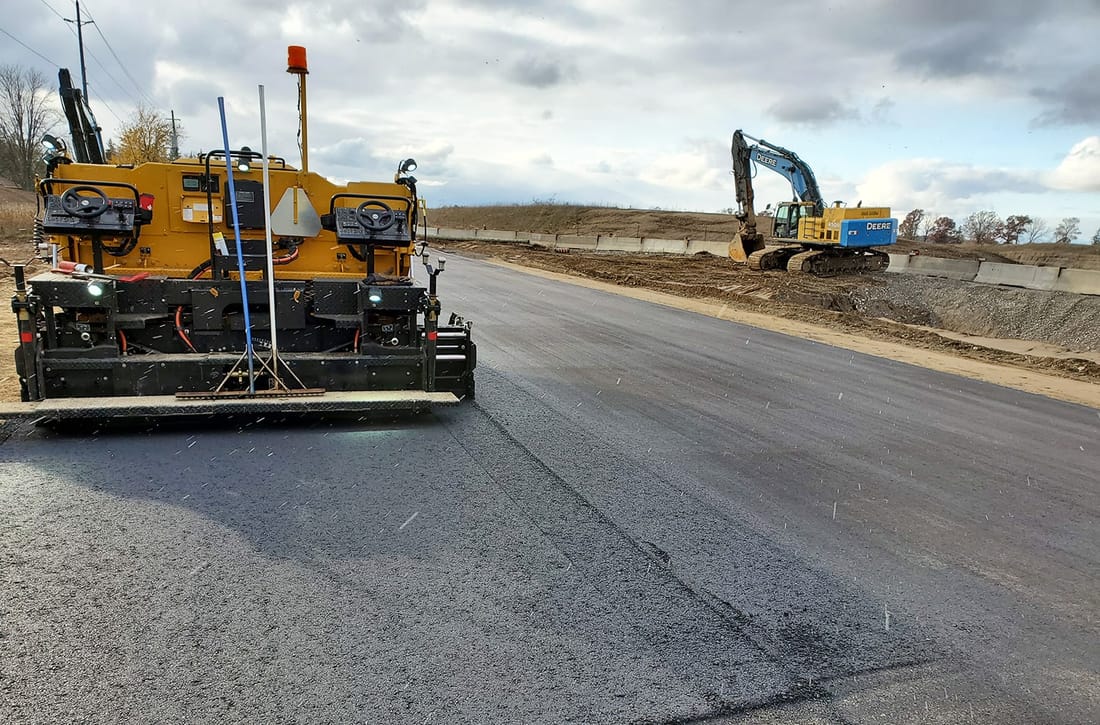
During paving, we manage joint locations, paving direction, and roller patterns so you get long-lasting seams and consistent density. We use tack coat between lifts and at all vertical joints. This is the small detail that often gets skipped on quick jobs and then shows up years later as seam cracking right down the roadway.
Materials, Mix Designs, and Options for Atlanta Roads
Not every asphalt road in Atlanta needs the same mix or structure. Precision Asphalt Atlanta works with local DOT-approved plants so we can match mixes to your budget, traffic loads, and city or county standards.
For subdivision and neighborhood streets, a standard hot mix surface with 9.5 mm or 12.5 mm aggregate is often appropriate. These mixes give a smooth ride for residential speeds and are cost effective to maintain. On steeper grades, like some hilly streets in southwest Atlanta or parts of DeKalb, we may recommend a slightly coarser surface or additional texture to reduce slipperiness in wet conditions.
For collector roads, bus routes, or warehouse corridors, we usually move to heavier duty mixes with modified binders. These resist rutting under slow, turning traffic, which is a common failure mode at intersections with frequent bus or truck stops. We also pay close attention to where heavy vehicles start and stop, then reinforce those zones with thicker binder or stronger mix designs.
Drainage is another key design choice. In areas that see frequent ponding or where curb and gutter are in poor shape, we might suggest raising the profile slightly during paving, correcting the crown, and integrating new or reworked inlets. On some longer, gently sloped roads, creating and maintaining a clear path for water to get from the surface to the storm system is as important as the asphalt itself.
We can also plan phasing and lane configurations to match your specific use. For example, if you manage a logistics park near the airport, we can design thicker asphalt in truck lanes and turning areas, with standard sections elsewhere, instead of overspending on a uniform heavy-duty section. This kind of targeted design keeps long-term performance up and overall project cost reasonable.
What Drives Road Paving Cost, Timelines, and Disruption
On road, street, and municipal paving jobs around Atlanta, cost usually comes down to four main factors: the condition of what is already there, traffic control requirements, structural design, and access.
If your existing road has decent structure and only surface cracking and ruts, we may be able to mill and overlay. This keeps costs lower because we reuse the existing base and avoid deep excavation. If we find widespread base failures, alligator cracking, or significant settlement, full-depth reconstruction or reclamation is often cheaper in the long run, even though the up-front price is higher.
Traffic control in a busy corridor can be a major cost and scheduling driver. On local neighborhood streets, we can often work with flaggers and short-term closures, scheduling around school bus times and resident access. On busier routes or around hospitals, schools, or business parks, we might need night work, staged construction, or detailed MOT (maintenance of traffic) plans. Precision Asphalt Atlanta coordinates with local agencies and, when needed, Georgia DOT standards so paving does not gridlock the area.
Structural design and thickness are another key cost driver. A simple residential cul-de-sac off a quiet street needs far less asphalt and base material than a truck route with constant container traffic. We will show you where money spent on structure will save you multiple resurfacing cycles later, and where it is safe to keep things lean.
Access and existing constraints round out the picture. Tight intown streets with on-street parking, narrow lanes, and overhead trees can slow production because of smaller equipment and more hand work. Rural or edge-of-metro roads may need temporary stone turnouts, driveway tie-in work, or shoulder stabilization. We factor all of this into our proposals, so you are not surprised by change orders later unless hidden conditions are discovered that no one could see at bid time.
Planning, Maintenance, and Working With Precision Asphalt Atlanta
Good road paving is as much planning as it is equipment. Before we bring in a paver, Precision Asphalt Atlanta maps out phasing, detour routes if needed, emergency access, school and trash schedules, and utility conflict points. In older areas of Atlanta where utilities have been cut into streets over and over, we work around manholes, water valves, gas boxes, and past trench repairs that can create future weak points if not handled carefully.
We prefer to walk projects with the owner or municipal contact in advance. This is when we can point out sections that really need base repair, areas that are overlaid so many times that curbs are almost buried, and spots where ponding will continue unless grades are adjusted. It is also the time to decide where to end work, how to tie in at city or county limits, and which side streets or alleys to include so you do not end up with mismatched joints right at your boundary.
After the new surface is down, ongoing maintenance decisions matter. We can help you plan a realistic maintenance cycle: crack sealing within the first few years, localized patching where utilities cut in, and timing of your next overlay before the road gets to full structural failure. In our climate, a structured plan usually extends pavement life by years compared with a wait-until-it-fails approach.
When you contact Precision Asphalt Atlanta about road, street, or municipal paving, expect a straightforward process: an initial site review, clear recommendations for milling versus reconstruction, a written scope that spells out thicknesses and limits, and a schedule that respects your residents or users. Whether you manage a small HOA street system, a private industrial loop, or a municipal network, our goal is simple: build a road that drains, carries traffic safely, and does not surprise you with early failure.